
Garden Diaries · Reader Review · United Kingdom
I Spent A Summer Watching Bees Go Thirsty In My Own Garden. Then I Tried These Flower Bowls.
A reader from Surrey on the £-for-£ simplest change she's made to her borders in years — and the small detail that made the difference.

Last July, during that long dry stretch when the lawn turned the colour of digestive biscuits, I noticed something I'd never really paid attention to before: bees kept landing on the wet rim of my watering can. Not the lavender. Not the echinacea. The watering can.
It turns out bees need water almost as much as nectar — to cool the hive, to dilute stored honey, to survive a heatwave. And in a typical suburban garden, once the puddles have gone, there isn't much left for them. Ponds are rare, birdbaths are too deep, and a saucer of water is a drowning risk for anything the size of a bumblebee.
A friend at our allotment pointed me towards Binrem™ BeeBloom Water Bowls — a set of shallow, flower-shaped bowls on slim stakes that you push into a border. I was sceptical. It sounded like garden-centre tat with a good story attached.
30-day money-back guarantee · fast UK delivery
What actually turns up in the box
A set of moulded, glossy petal-shaped dishes in poppy red, orange, butter yellow and violet, each on a black stake. No tools, no assembly, no instructions worth reading. You push the stake in until the bowl sits just above the surrounding planting, then pour in a splash of water. The whole job took me under two minutes for four of them.
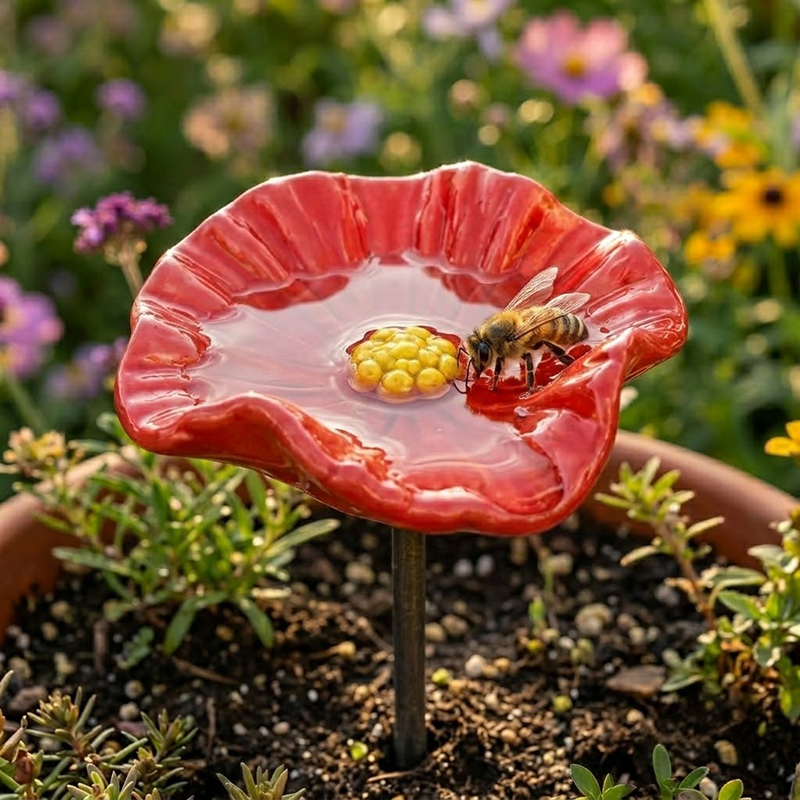
The design detail that matters is the depth. These hold barely a tablespoon or two of water in a wide, gently textured dish, so an insect drinks from the rim rather than swimming for its life. Deep containers and slippery ceramic are exactly what you don't want.
The first week: nothing. The second week: everything.
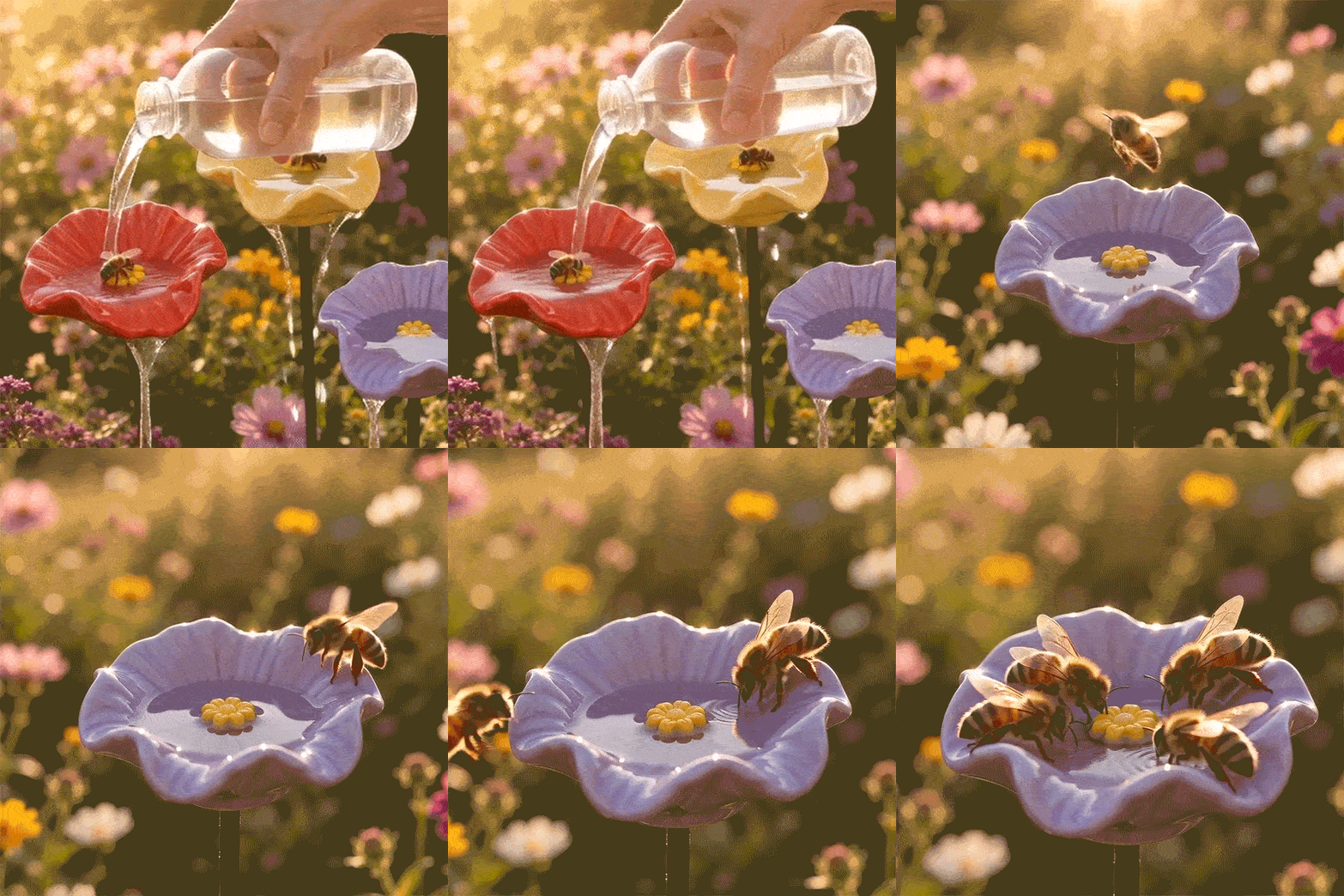
For about five days I saw absolutely no interest and quietly assumed I'd wasted my money. Then, on the first properly warm morning after, I counted six bees on the yellow bowl before I'd finished my coffee. Hoverflies came next. By August a small tortoiseshell butterfly was a regular.
My theory, for what it's worth: they need to be discovered, and they get discovered faster when they're sitting inside the planting rather than off on a patio somewhere. Mine are wedged between lavender and marjoram, and that corner is the busiest part of the garden now.
Limited introductory pricing while stocks last
Three things I'd tell anyone before buying
1. Refill them like you'd water a pot
Shallow water evaporates fast. I top mine up with the last of the watering can each morning, which costs nothing and takes seconds. If you leave them dry for a week the visitors move on and you have to earn them back.
2. Keep the water clean
A rinse with a thumb once a week stops the green film building up. Never add sugar or honey — it does more harm than good and attracts wasps in numbers you'll regret.
3. Placement beats quantity
Four bowls clustered near flowers in a sunny, sheltered spot did far more in my garden than the two I initially spread out along a fence line.

Is it worth it?
Honestly — as a piece of garden décor alone I'd have been happy with them; they read as a scatter of poppies from the kitchen window. That they also give something back to the pollinators doing the heavy lifting in my vegetable beds makes it an easy recommendation. It's a small, cheap, slightly lovely thing, and those are rarer than they should be.
The set is currently discounted at the official offer page with a 30-day money-back guarantee, which is what tipped me into ordering a second set for my sister.
